Cost guide
The Best Time of Year to Replace Windows (And When the Deals Actually Happen)
Here's something window companies don't advertise: the same project can cost 10–20% less depending on when you sign the contract. Window replacement is a seasonal business, and slow months mean motivated installers.
The short answer
Late fall through winter (November–February) is when deals happen. Demand drops, crews have open schedules, and companies discount to keep them busy. Spring and early summer are the most expensive — that's when everyone else calls.
Season by season
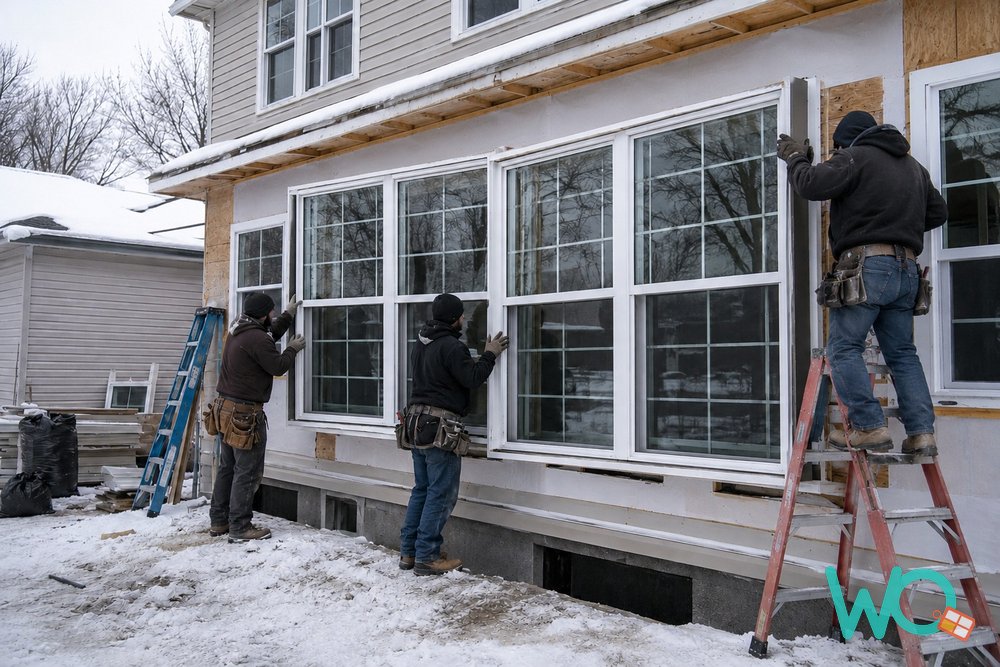
Winter (Dec–Feb): Best prices, real discounts. Demand bottoms out, and many companies run their steepest promotions. Modern installers replace windows one at a time, so your house is never fully open to the cold — a room loses surprisingly little heat in the 30–60 minutes each window takes. The trade-off: caulk and sealants need care below freezing, so you want an experienced crew. In mild-winter states (the South, coastal West), winter is simply free money.
Spring (Mar–May): Convenient, crowded, full price. Pleasant install weather — and everyone knows it. Books fill up, lead times stretch to 4–8 weeks, and discounting mostly stops.
Summer (Jun–Aug): Peak season, peak prices. The busiest window months in most of the country. If your AC is fighting leaky windows, you'll feel the urgency — but you'll pay for it. One exception: very hot states sometimes see a brief midsummer lull (installers avoid 100°F attic-adjacent work), which can open small discounts.
Fall (Sep–Nov): The smart-money window. Weather is still ideal, but demand starts sliding after school starts. Late fall is the sweet spot: good conditions and companies beginning to hunt for winter work. If you want the best of both, get quotes in October and let them compete.
Timing tricks that work in any season
- Quote in the off-season even if you install later. Contracts signed in January at winter pricing can often schedule a spring install.
- Ask about end-of-month and end-of-quarter. Sales reps have targets. A quote that was "firm" on the 12th gets flexible on the 28th.
- Mention you're comparing 3–4 quotes. Nothing moves a price like a competitor's number. This is standard practice in the U.S. — no installer will be offended.
- Watch for holiday promotions. Black Friday through New Year's has quietly become a real discount window in home improvement.
Don't wait too long, though
A failing window costs money every month — drafts, condensation between panes, and rising energy bills don't pause for the right season. If your windows are actively leaking air or water, the "best time" is before the next heating or cooling season, whichever hits first.
Frequently asked questions
Start with your number
Before you time the market, know your baseline. Our free calculator gives you a personalized estimate for your ZIP code and window count in about 60 seconds — so when quotes come in, you'll know a good one when you see it
Calculate my window replacement cost →WindowQuoteGuide is an independent cost-information resource. Estimates are based on published national and regional installation averages and are for general guidance only. If you request quotes through our site, we may receive compensation from partner networks — this never affects the price you pay.
← All guides